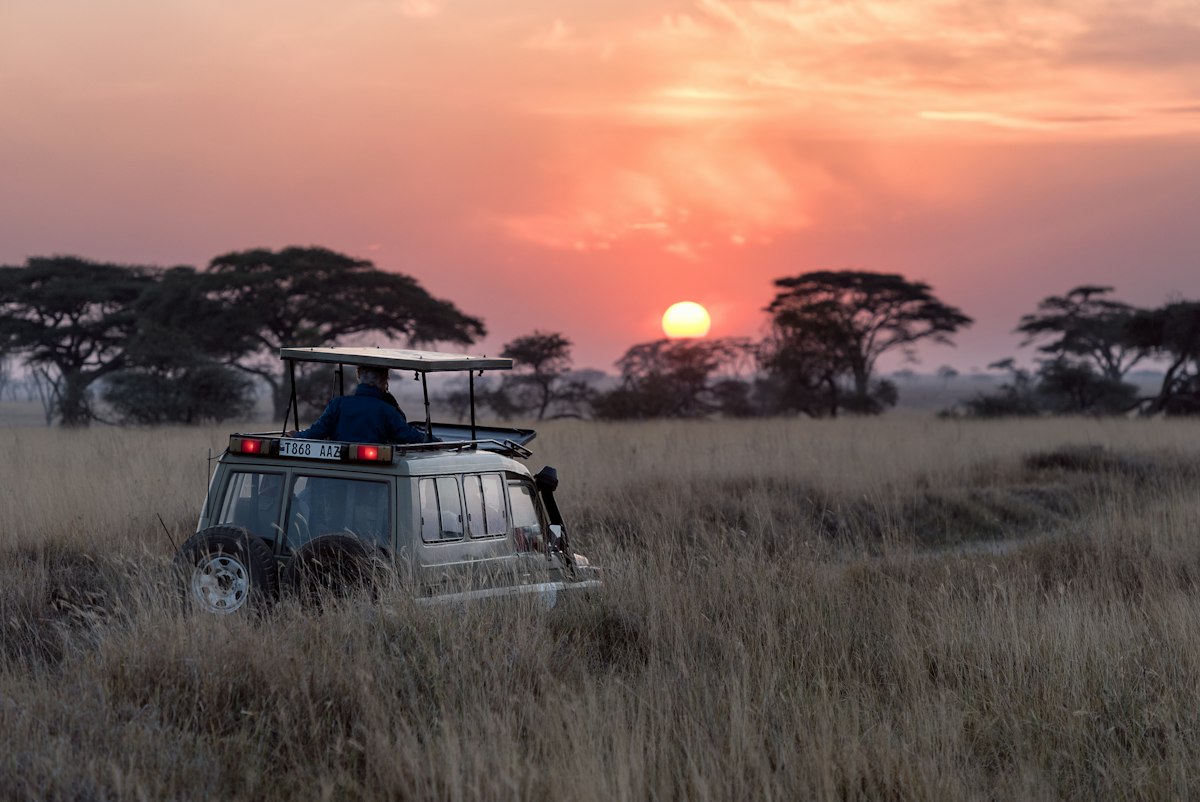
An African safari is, for many travelers, the single most transformative trip of a lifetime. The scale of the landscape, the proximity to wildlife, and the quality of silence in the bush at dawn create an experience that no amount of nature documentary footage can prepare you for. But the distance between a mediocre safari and a transcendent one is vast — and it comes down to planning.
Choosing Your Destination
The "Big Five" label — lion, leopard, elephant, buffalo, rhinoceros — applies across multiple countries, but the experience varies enormously. Tanzania's Serengeti offers the Great Migration, a spectacle of two million wildebeest crossing crocodile-infested rivers that has no parallel in the natural world. Botswana's Okavango Delta provides a water-based safari experience — gliding through papyrus channels in a mokoro (dugout canoe) while elephants swim alongside. Kenya's Masai Mara offers the Migration's northern chapter plus the cultural richness of Maasai communities. South Africa's Kruger-Sabi Sands delivers the most reliable Big Five sightings with the most developed luxury lodge infrastructure.
The Green Season Advantage
Most first-time safari travelers default to the dry season (June–October), when vegetation thins and animals congregate around water sources. The experienced traveler, however, knows the green season secret: from November to March, rates drop by 30–50%, the landscape transforms into a lush paradise, migratory birds arrive, and predator-prey interactions intensify as newborn animals attract opportunistic hunters. The lodges are quieter, the light is more dramatic, and the value is extraordinary.
Lodge Selection: The Details That Matter
At the luxury tier, the difference between lodges is not thread count or champagne brand — it is guiding quality and concession exclusivity. A private concession means your vehicle will not compete with twenty others for a leopard sighting. It means your guide can go off-road to follow a hunting pack of wild dogs through the bush. The best lodges — Singita, andBeyond, Great Plains Conservation — employ guides with decades of bush experience who transform a game drive into an ecological masterclass.
"The difference between a good safari and a life-changing one is not the animals you see. It is the guide who helps you understand what you're witnessing."
What to Budget
A luxury safari typically ranges from $1,000 to $3,000 per person per night, all-inclusive (meals, drinks, game drives, park fees). This sounds steep until you calculate what's included: twice-daily guided drives in open vehicles, bush walks with armed rangers, all meals and premium drinks, laundry, and often charter flights between camps. A well-planned 7-night safari across two or three camps provides an immersive experience that justifies every dollar.
The Itinerary Architecture
The ideal luxury safari combines two to three camps across different ecosystems. Begin with a classic savanna experience (Serengeti or Mara), move to a water-based camp (Okavango or Lower Zambezi), and finish with a recovery stay — perhaps a wine estate in the Cape Winelands or a beach villa in Zanzibar. This rhythm of intensity and decompression ensures you return home restored rather than exhausted.
Planning a safari is an exercise in trust — trust in your advisor, trust in the ecosystem, and trust that the wild will reveal itself on its own terms. The best-planned safari is not the one with the most sightings. It is the one that leaves you fundamentally changed.